PLAYED – May 2010

Posted by Eric Bee | May 24, 2010

Played_header_March10

Did you miss us? We sure missed you. Most of all, we missed bringing you the latest gaming industry news and trends in this excited-for-E3 issue of PLAYED. This month, we consider the celebrity of developers and how it may shape the industry in years to come. We also check out Apple’s latest step into the gaming space with their Game Center mobile network and proprietary approach to the mobile space, along with the industry’s “green” efforts towards an improved environment. Finally, with achievements and rewards an integral part of gaming, we look at how high scores and in-game bonuses are influencing real-life programs and activities.

Reflecteur – Issue 59

Posted by Stephanie Huynh | May 17, 2010

Denuology_Reflecteur_59

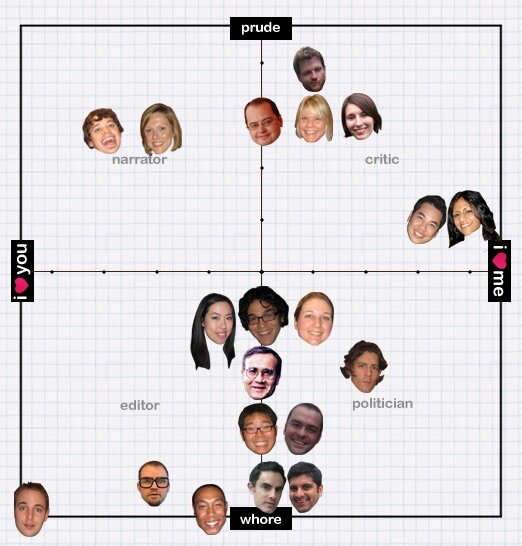
Issue #59 of Reflecteur makes us question why we love infomercials so much (hint: the fails), how a common grammatical error turned into a living, breathing creature (so proof read), and what you get when you combine any two of the Seven Deadly Sins (we may or may not be guilty of one or two of them).

Click here or above to get reading and enjoy!


Matt Story talks mobile gaming at Digital Hollywood

Posted by Mary DeBrunner | May 13, 2010

mattstory_isc

Last week, Denuologist Matt Story participated as a speaker at the 2010 Digital Hollywood Spring event in Santa Monica, CA. A collection of leaders from the media, creative, technology and entertainment industries gathered for this three-day event exploring topics ranging from smartphones to online video to music to Hollywood to videogames.

Matt’s panel focused on the strategies, market and rewards for games, music and content. It also specifically spoke to the rise of SmartPhones, iPads and digital tablets. Joining him on the panel was Stephen Jackson, President and CEO of Smashing Ideas; Jason Henderson, Games Product Manager at Verizon; Michael Schade, CEO and Co-Founder of Fishlabs; Daniele Calabrese, Founder and CEO of sountrckr; and Jennifer Cooper, Founder and Principal of Rocket Spark Media, who also participated as the panel moderator.

The Wrath of the Lich King’s Farm

Posted by John Rafferty | May 7, 2010
There’s been a lot of talk over the past few years about approachable gaming mechanics infiltrating the hardcore space. When Madden 2011 releases this August, it will include a new gameplay feature meant to acclimate the gamer to an overwhelming virtual playing field of multi-button juke moves, coverage audibles, and receiver hot routes by speaking directly in the player’s ear. Sam Fisher’s latest adventure scrapped the classic Splinter Cell pure stealth, trial and error gameplay in favor of a more accessible choose-your-own-style-of-killing-bad-guys approach, to the chagrin of some of the series’ more rabid fans. Even Bioware toned down many of the traditional RPG elements in Mass Effect’s sequel in an effort to reach a wider market of shooter fans. Developers and publishers have an obvious interest in growing their audiences, especially considering the multi-million dollar price tags associated with AAA titles. Amongst all that approachable talk, however, there’s been little mention of the other side of that coin, that is, the hardcore mechanics of approachable, and social, gaming.
At this week’s Social Gaming Summit 2010, Ohai’s Susan Wu mentioned, almost in passing, that “Farmville is teaching non-hardcore gamers very hardcore tendencies, like click farming over and over and over.” When you think about Farmville, or most social game experiences, in that sense, their similarities to classic “hardcore” titles are readily apparent. Any World of Warcraft player can tell you that most early quests are little more than a study in patience as they “grind” away at leveling up their character. Unsurprisingly, Blizzard’s other giant, Diablo, perfected the art of point and click (and click and click) adventuring, driving players to addictive lengths for more virtual loot. Yet whereas these hardcore adventures had something of a narrative to drive, or at least condone, the relentless behavior, social titles have taken hardcore mechanics a step further in stripping out the story aspect in favor of pure digital goodie greed. You’re not saving a princess, after all, but merely building a bigger farm or hotel than your facebook friend, in an overwhelming display of pure competition – another traditional hardcore tenant. And if you don’t have the time to “grind” away building your restaurant, or hotel, or nautical wonderland, you can buy your way to the next level with virtual currency, similar to MMORPG’s gold farming shops – a practice even the hardcore community condemns.
These similarities, in conjunction with game mechanics’ growing presence in the social psyche (e.g. FourSquare, MyTown, Jesse Schell’s DICE talk), may mean that the differences between hardcore and approachable gaming experiences are becoming less and less about those actual mechanics, and more so about the game’s content. It’s this consideration that should impact gamers’ choices going forward, so long as game makers capitalize on the cross-over mechanics, and evangelize those options to a growing market. Gamers of all types can focus less on limiting their experiences based on those traditional classifications, opening the doors to an expanded gaming library they may have never even considered. That’s not to say that women 35-54 will soon be joining guilds as they raid the dungeons of Azeroth, but if they did, the Lich King might be surprised by their grinding skills.
Granted, this could all just mean that Watercooler’s Andrew Sheppard was right in that “more social games are being built as lead-gen applications [instead of actual game experiences]” and we’re doomed to addictive click harvesting till the cows come home.

Lich Farmer

There’s been a lot of talk over the past few years about approachable gaming mechanics infiltrating the hardcore space. When Madden 2011 releases this August, it will include a new gameplay feature meant to acclimate the gamer to an overwhelming virtual playing field of multi-button juke moves, coverage audibles, and receiver hot routes by speaking directly in the player’s ear. Sam Fisher’s latest adventure scrapped the classic Splinter Cell pure stealth, trial and error gameplay in favor of a more accessible choose-your-own-style-of-killing-bad-guys approach, to the chagrin of some of the series’ more rabid fans. Even Bioware toned down many of the traditional RPG elements in Mass Effect’s sequel in an effort to reach a wider market of shooter fans. Developers and publishers have an obvious interest in growing their audiences, especially considering the multi-million dollar price tags associated with AAA titles. Amongst all that approachable talk, however, there’s been little mention of the other side of that coin, that is, the hardcore mechanics of approachable, and social, gaming.

PLAYED – March/April 2010

Posted by Eric Bee | May 6, 2010

Played_header_March10

This month’s issue of PLAYED takes a trip to the Game Developers Conference to bring you the insights and trends that are taking shape from the core of the gaming industry. From Sony’s motion control to new advents in digital distribution, the conference showcased what the future of gaming could be through the eyes of gaming’s best and brightest. We also take a look at how publishers are changing the way they promote their media opportunities to marketers, and check out how Valve’s Steam distribution platform continues its trendsetting ways. Finally, in an increasingly connected culture where information is accessed instantly, we look at how gaming behavior is shifting to match this demand. .